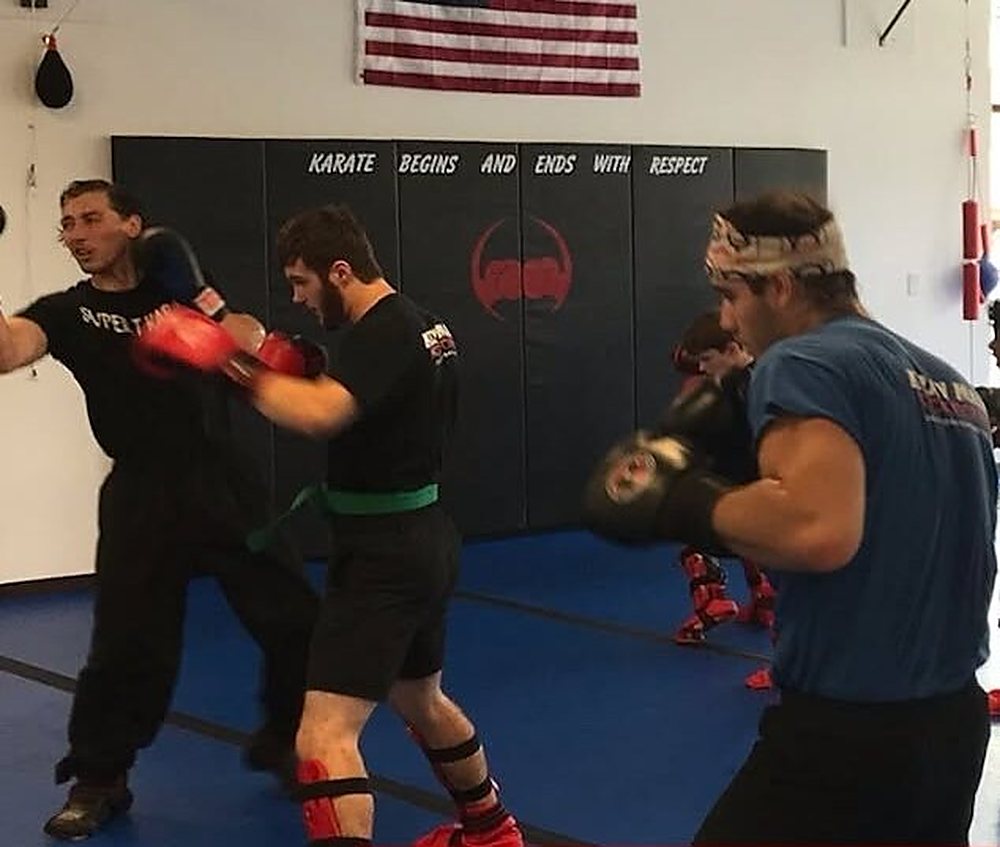
If you are searching for self-defense classes Grand Rapids residents can use to build practical skills and confidence, you will probably see karate, kickboxing and Krav Maga on the list. Each name suggests a different kind of training, but a label alone does not tell you what happens in class, how instructors teach, or whether the approach suits your goals. At Super T Karate, our Teen & Adult program for ages 13 and up includes karate, kickboxing and Krav Maga-style self-defense, with an emphasis on awareness and sound decisions.
The best starting question is not, “Which style wins?” It is, “What do I want to learn, and what kind of practice will help me keep learning?” We have served Northeast Grand Rapids since 1992, and we believe self-defense begins with paying attention, setting boundaries and making safer choices. That is why Master Terry “Super T” Gay’s motto is “Common sense before self-defense.”
Self-defense classes Grand Rapids: compare the training, not just the name
Martial arts styles have different histories and training methods, yet good instruction has a lot in common. Students need clear explanations, safe practice, repetition and feedback. They also need a respectful room where beginners can ask questions and progress at a sensible pace. Here is a useful plain-language comparison before you visit a school.
Karate: structure, movement and control
Karate training often develops balance, coordination, focus and controlled technique through structured drills. Students learn to move with purpose, keep their posture and respond to instruction. A class can include partner practice and conditioning, with instructors adapting activities to the students in front of them. The structure can appeal to someone who wants a steady learning path rather than an unconnected collection of moves.
- Look for instructors who explain why a movement matters, not only how to copy it.
- Ask how beginners practice with partners and how safety is maintained.
- Notice whether students are encouraged to stay composed and aware, even during energetic drills.
Kickboxing: fitness and striking practice
Kickboxing is commonly associated with punches, kicks and conditioning. For adults who want an active workout alongside skill practice, that combination can be motivating. Training may build coordination and stamina while teaching students to move with control. Fitness is not a substitute for awareness or decision-making, though, and any school should make the purpose and safety expectations of partner work clear.
Ask whether a class is designed around fitness, technique, self-defense, or a blend. A good fit depends on your priorities and the way the instructor teaches. You should be able to explain your experience level and ask about modifications before joining an activity.
Krav Maga-style self-defense: practical scenarios and choices
Krav Maga is widely known for practical self-defense approaches and scenario-based training. A Krav Maga-style element may focus on recognizing a problem, creating distance, protecting yourself and getting to safety. The phrase “style” matters: schools differ in curriculum and credentials, so ask what the class actually covers rather than assuming every program is identical.
No class can promise that a person will be safe in every situation. Responsible instruction recognizes that real events are unpredictable. Training can help you rehearse decisions and become more familiar with basic responses, but avoiding danger, seeking help and leaving when possible remain central.
What should adult beginners look for in a class?
The instructor and learning environment matter at least as much as the style. When you visit, notice whether the teaching is clear and whether the class welcomes people with different backgrounds. At our Northeast Grand Rapids school, Sensei Leah and Sensei Ryan teach alongside Terry, bringing a family-run atmosphere to training. We want students to understand the lesson, not feel they have to prove themselves on day one.
- Ask what a typical class includes and how instruction changes for a first-time student.
- Check how partner drills are introduced, supervised and adjusted for comfort.
- Look for calm correction, clear boundaries and respect among students.
- Consider whether the schedule and location work for you consistently.
- Ask how the curriculum balances movement, fitness, awareness and self-defense decisions.
A mom told us she had expected self-defense training to be intimidating, but felt more at ease once she saw how the instructor explained each drill and let students ask questions. That kind of first impression is worth noticing. You should leave a visit with a clearer understanding of the program, not pressure to pretend you already know what you are doing.
Common sense before self-defense
Our motto is not a slogan about winning a confrontation. “Common sense before self-defense” means noticing what is happening, trusting your judgment, keeping boundaries and choosing the safest available option. Often the most useful response is to avoid an isolated place, leave a tense interaction, call someone you trust or ask for help. Physical techniques are only one part of a wider set of decisions.
- Pay attention to your surroundings and the people around you.
- Use a clear voice and direct boundaries when it is appropriate and safe.
- Create space and move toward a safer, more public place when possible.
- Seek help from trusted people or local authorities when a situation calls for it.
- Remember that leaving is a success, not a failure of courage.
In class, these ideas give physical practice a purpose. Students can learn to stay composed, understand distance and practice movement in a controlled setting. We do not present training as a guarantee or encourage students to seek confrontation. The goal is to build skill and judgment that support safer choices.
Terry’s world-title background and our teaching approach
Master Terry “Super T” Gay has spent more than 50 years in martial arts. On February 1, 1986, he won the P.A.K.A. World Middleweight kickboxing title and fought on ESPN. He is a 9th degree black belt and a member of the International Martial Arts Hall of Fame. That experience is part of our school’s history, but a student’s class should still be about learning at their own level.
Terry’s background gives him a deep perspective on training, and the family-run school is also shaped by Sensei Leah and Sensei Ryan. Together, we teach students to practice with discipline and respect. Being a champion is not a requirement for joining us, and beginners do not need prior martial arts experience. Our Teen & Adult martial arts program is for ages 13 and up and combines karate, kickboxing and Krav Maga-style self-defense.
Super T Karate has been at 4981 Plainfield Ave NE in Grand Rapids since 1992. Students come from Northeast Grand Rapids and nearby communities including Plainfield Township, Comstock Park, Rockford, Belmont, Kentwood, Walker and Cedar Springs. If you are comparing schools, you can read more about Terry, review all classes, or visit and contact us to ask what a first class looks like.
How to compare a trial class
A trial class lets you evaluate more than the style name. Pay attention to how the instructor welcomes new students, explains the activity and checks that everyone understands the safety expectations. If a drill moves too quickly, notice whether students can pause and ask for help. The way a school handles questions can tell you a great deal about its teaching culture.
Match the class to your reason for starting
Some adults begin because they want to feel more prepared, while others are looking for a challenging activity or a chance to learn a martial art. You do not need to choose only one reason. Tell the instructor what interests you and what experience you have, then ask how the program approaches those goals. Realistic expectations help you enjoy learning instead of judging yourself against an imagined expert.
- Ask whether you can observe or participate in a beginner-friendly introduction.
- Wear comfortable clothing and follow the school’s directions for the visit.
- Pay attention to how students communicate with one another during partner work.
- Consider whether you feel comfortable returning and learning at a steady pace.
It is also fine to compare more than one school. Look for straightforward answers about what is taught, how classes are organized and what happens when a student needs an adjustment. You should not be made to feel that asking questions signals a lack of commitment. Training is a personal choice, and a thoughtful first visit gives you useful information.
Skill is one part of a safer mindset
People sometimes imagine self-defense as a list of techniques to memorize. In real life, context and judgment matter. Paying attention early can help someone decide to cross the street, enter a business, contact a trusted person or leave an uncomfortable interaction. In class, we can discuss those choices alongside movement, without suggesting that anyone can control every circumstance.
Practice also means understanding limits. Students should not treat a class as permission to test techniques on friends, escalate a disagreement or take unnecessary risks. Responsible training is deliberate, supervised and respectful. If you have a concern about a drill or an injury, speak with the instructor before participating so an appropriate adjustment can be discussed.
Frequently Asked Questions
Which is better for self-defense, karate, kickboxing or Krav Maga?
There is no single best choice for everyone. Look at the actual instruction, safety practices, class atmosphere and your goals. Our Teen & Adult program includes karate, kickboxing and Krav Maga-style self-defense.
Can beginners join self-defense classes in Grand Rapids?
Yes. Beginners can start by asking the instructor how newcomers are introduced to drills and how activities are adjusted. You do not need to arrive knowing martial arts.
Is martial arts training a guarantee of personal safety?
No. Training cannot guarantee what will happen in a real situation. Awareness, avoidance, seeking help and choosing to leave are important, and responsible classes do not promise otherwise.
What ages can attend Super T Karate’s Teen & Adult program?
The Teen & Adult program is for ages 13 and up. Contact the school if you have questions about class fit or getting started.
Where is Super T Karate in Grand Rapids?
We are at 4981 Plainfield Ave NE in Northeast Grand Rapids. Call (616) 364-5111 or use our contact page for visit information.
If you are weighing karate, kickboxing and Krav Maga-style training, choose the program that treats skill, awareness and judgment as connected parts of learning. We would be glad to help you see whether our approach fits. Try one week of classes and get a free Super T T-shirt for $19.99 through our Teen & Adult program.
New Student Experience
Ready to See It In Person?
1 Week of Classes — $59 $19.99
Keep Reading
Parent Guide
Karate for Bullying: How Grand Rapids Kids Learn to Stand Up Without Fighting
Child Development
Kids Martial Arts for Focus and Confidence: What Grand Rapids Parents Notice First
Parent Guide
Martial Arts Training Partners: Why Training Together Works (And When It Doesn't)
Parent Guide