When parents search for karate for bullying, they are often looking for more than punches and kicks. They want their child to feel safer, know what to do when a situation gets uncomfortable, and have the confidence to ask for help. At Super T Karate in Northeast Grand Rapids, we start with a simple motto: "Common sense before self-defense."
That order matters. A child should not be expected to solve bullying with a fight, and martial arts training should never suggest that physical force is the first answer. We teach awareness, voice, posture, getting support from a trusted adult, and de-escalation. Physical defense is a last resort, reserved for an immediate safety threat when other options are not available.
This approach gives children practical steps they can understand and rehearse. It also gives parents a useful way to talk about confidence: standing up for yourself can mean setting a boundary, walking away, or telling an adult. It does not have to mean hitting back.
What karate for bullying prevention should teach first
A martial arts class can help a child develop balance, coordination, and confidence, but bullying prevention is not a single technique. Children need to notice what is happening, choose a safe response, and know when to involve an adult. Those habits begin with common sense, not combat.
- Awareness: notice the setting, the people nearby, and whether a situation is becoming unsafe.
- Voice: use clear, firm words to set a boundary without insulting or threatening someone.
- Posture: stand in a balanced, calm way that communicates confidence without trying to provoke.
- Help-seeking: leave when possible and tell a trusted adult what happened.
- De-escalation: avoid trading insults, escalating a disagreement, or trying to prove a point.
These ideas are useful because they are not limited to a school hallway. A child may need to respond to teasing on a playground, pressure from a peer, or an uncomfortable interaction in a public place. The details change, but noticing, speaking clearly, moving toward safety, and seeking help remain sensible first steps.
Awareness means noticing, not living in fear
We want children to be attentive, not anxious. Awareness can mean recognizing when a friend is joking and when repeated behavior is becoming hurtful, noticing an adult who can help, or choosing to stay near a group rather than being isolated. It is a calm habit of paying attention to surroundings and feelings.
Parents can practice this in everyday situations with gentle questions: "Who could you go to if you felt uncomfortable?" or "What would help you feel safe right now?" There is no need to make every ordinary interaction sound dangerous. The point is to help children trust their observations and know that speaking up is always allowed.
A confident voice and posture can set a boundary
Children sometimes freeze when they feel put on the spot. Practicing a short, direct phrase can make it easier to respond. A child might say, "Stop, I don't like that," or "I need you to give me space," in a steady voice. The goal is not to sound tough or to win an argument. The goal is to communicate clearly and then move toward safety.
- Use a voice that is loud enough to be heard, without shouting insults.
- Keep words short and direct, so the message is easy to remember.
- Stand balanced and look toward the person if it feels safe, without moving closer to challenge them.
- After setting a boundary, leave the situation and find an adult when possible.
Posture is part of communication, but it is not a guarantee that someone will stop. We teach children to avoid confusing confidence with confrontation. Hands can remain in a non-threatening, protective position, feet balanced, and body angled toward a clear route away. If the other person keeps pushing, the next step is distance and adult help, not a contest of courage.
What does standing up for yourself really mean?
Standing up for yourself means recognizing that you deserve safety and respect, then making a sensible choice. Sometimes that means saying no. Sometimes it means walking away without giving the other person the reaction they want. And sometimes it means reporting what happened even if a child worries that telling will make things worse.
A mom told us that her child had started using a calm, clear voice when a classmate crossed a boundary, and felt more comfortable talking with an adult afterward. That kind of everyday confidence is the point. The aim is not to create a child eager to confront others; it is to help a child know they have options and support.
Tell a trusted adult, and keep telling until you get help
Children should not be made responsible for handling persistent bullying alone. If behavior keeps happening, involves threats, causes injury, or makes a child feel unsafe, tell a parent, teacher, school counselor, coach, or another trusted adult. If the first person does not respond, tell another adult. Asking for help is not tattling when safety is involved.
- Move to a safer place or toward other people if you can.
- Tell a trusted adult what happened, where it happened, and who was involved.
- Explain whether it has happened before and whether you feel safe now.
- Ask the adult what the next step will be, then check back if the behavior continues.
Parents can support the conversation by listening without blame. Start with open questions and give your child time to answer. Avoid asking why they did not fight back or why they did not tell sooner. Reassure them that the behavior is not their fault, and work with the school or other responsible adults on a plan.
It can also help to agree on who the child can approach in different settings. Name a teacher or staff member at school, an adult at an activity, and a family contact when away from home. This turns the general instruction "tell someone" into a concrete option a child can remember.
De-escalation is a strong choice, not backing down
De-escalation means choosing not to feed a conflict. That may look like using a neutral response, changing direction, or leaving rather than trading taunts. A child does not have to deliver the perfect comeback. Getting away and finding support can take more judgment than staying to argue.
- Do not answer every insult or dare.
- Avoid threats, name-calling, and attempts to embarrass the other person.
- Create distance and move toward a supervised, public place.
- Get help promptly if someone blocks the way, follows, threatens, or becomes physical.
We talk about these choices in age-appropriate language and encourage children to think ahead. A younger child may need a simple phrase and a clear instruction to find a teacher. An older child may be able to describe more options and consider how to disengage from peer pressure. In either case, adults remain responsible for addressing ongoing bullying.
When physical defense is a last resort
Physical self-defense belongs at the end of the decision-making process, not the beginning. If a child can safely leave, set a boundary, or get an adult, those are the preferred choices. If there is an immediate physical threat and no safe way to get away, protective movement may be necessary to create an opportunity to escape and get help.
In training, we emphasize control, safety, and responsibility. A technique is not a tool for punishment, payback, or responding to hurt feelings. Children should not be encouraged to chase someone, continue once danger has passed, or use a move to settle an argument. The safest outcome is getting away from harm and bringing in a responsible adult.
Every situation is different, and no class can promise that a child will never face bullying. We can help children practice useful habits and build coordination and confidence, while parents and school staff address the behavior itself. If there is an immediate danger, seek help from nearby adults or emergency services.
How our Grand Rapids classes build confidence responsibly
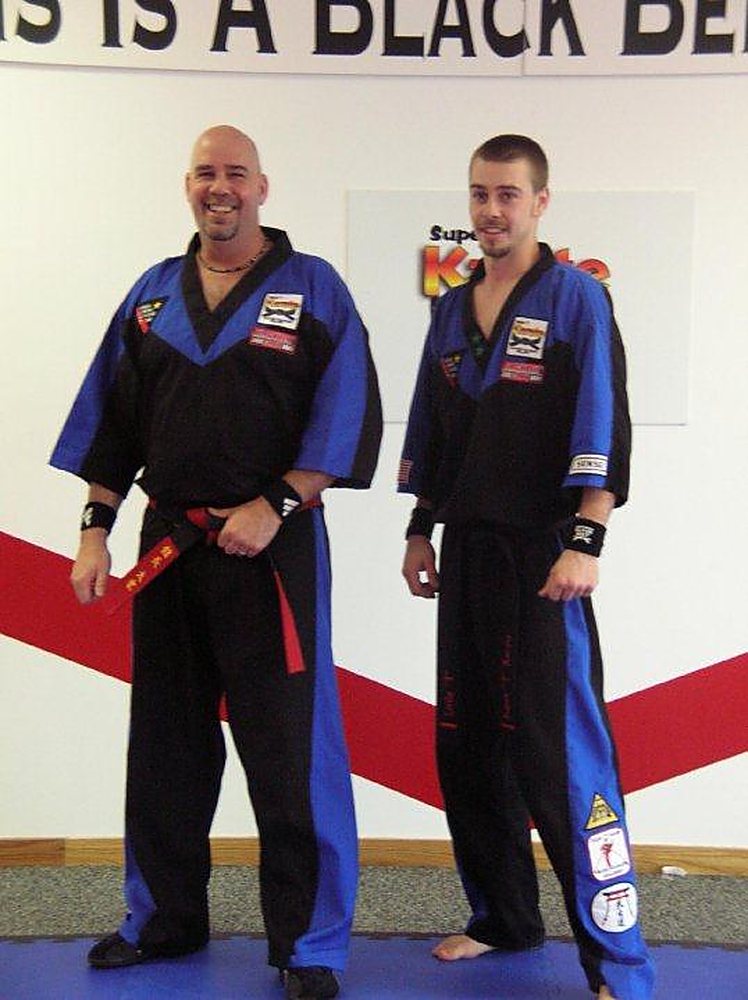
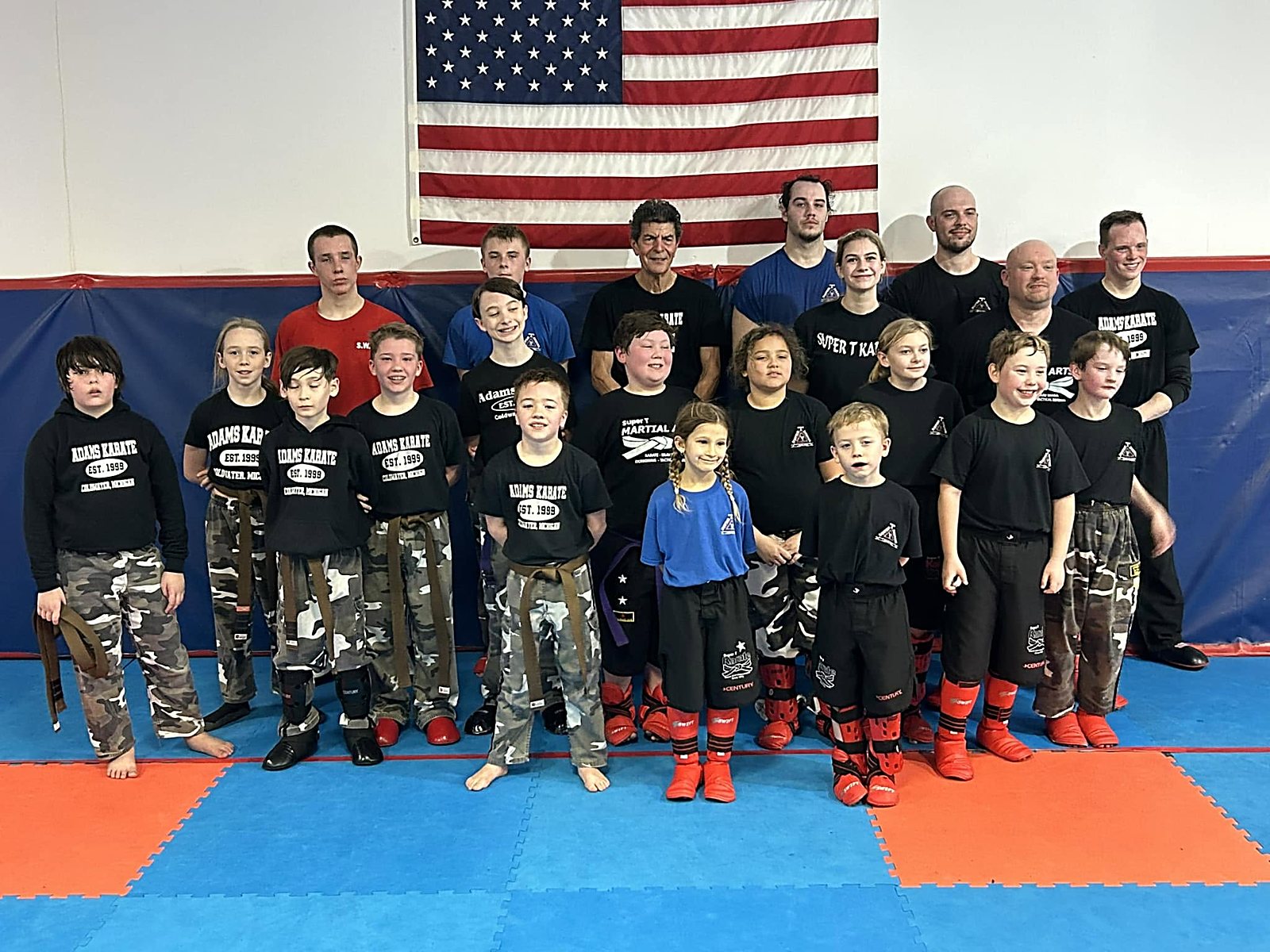
At Super T Karate, students learn in a structured setting where respect and self-control matter alongside physical skills. Master Terry "Super T" Gay founded the school and has more than 50 years in martial arts. Sensei Leah and Sensei Ryan teach alongside him, bringing a family-run approach to helping students learn and grow.
Our kids martial arts classes are for ages 6 to 12. Children work on age-appropriate skills, focus, listening, and respectful behavior. We encourage parents to talk with us about their child's goals, temperament, and any concerns so we can explain what class can support and where a family should seek help beyond martial arts.
For children ages 4 to 5, Super T Tigers preschool martial arts introduces foundational movement and class habits in a program designed for young learners. At this age, the emphasis is on simple directions, confidence, and learning to participate safely. It is not about expecting a preschooler to manage serious bullying alone.
Families who want to understand our teaching background can learn about Master Terry. We have served the Grand Rapids area since 1992, and families come from Northeast Grand Rapids, Plainfield Township, Comstock Park, Rockford, and nearby communities. We aim to make the values behind training clear: discipline, respect, awareness, and common sense.
Frequently Asked Questions
Does karate for bullying teach children to fight back?
No. Our first priorities are awareness, a clear voice, leaving when possible, de-escalation, and telling an adult. Physical defense is a last resort for an immediate safety threat when safer options are not available.
Can karate stop my child from being bullied?
No class can guarantee that bullying will stop. Training can help a child practice confidence, self-control, and sensible responses, but adults and schools need to address persistent behavior and keep children safe.
What should my child do if someone keeps bothering them?
Encourage your child to move toward safety and tell a trusted adult what happened. If the behavior continues, tell another responsible adult and follow up with the school or organization. Reassure your child that asking for help is the right thing to do.
Is martial arts suitable for a shy child?
Many children benefit from practicing movement, listening, and speaking up in a structured setting, but every child is different. Talk with us about your child's needs and visit to see whether the teaching environment feels like a good fit.
What age can children start?
Super T Tigers is for ages 4 to 5, and Kids Martial Arts is for ages 6 to 12. The right starting point depends on your child's age and readiness, so reach out if you have questions about a program.
Common sense first, confidence for the long run
A child does not need to be fearless to make a strong choice. They need to know their boundaries matter, that walking away can be wise, and that adults are there to help. That is what we mean by "Common sense before self-defense." Karate can be one part of building confidence, alongside attentive parenting and adults who take bullying seriously.
If you are exploring karate for bullying prevention in Grand Rapids, come meet our team and ask how we teach age-appropriate confidence and self-control. Try one week of classes plus a free Super T T-shirt for $19.99. Get started with our kids martial arts program, or ask us about Super T Tigers for ages 4 to 5.
New Student Experience
Ready to See It In Person?
1 Week of Classes — $59 $19.99
Keep Reading
Child Development
Kids Martial Arts for Focus and Confidence: What Grand Rapids Parents Notice First
Self-Defense
Self-Defense Classes Grand Rapids: Karate, Kickboxing or Krav Maga?
Parent Guide
Martial Arts Training Partners: Why Training Together Works (And When It Doesn't)
Parent Guide