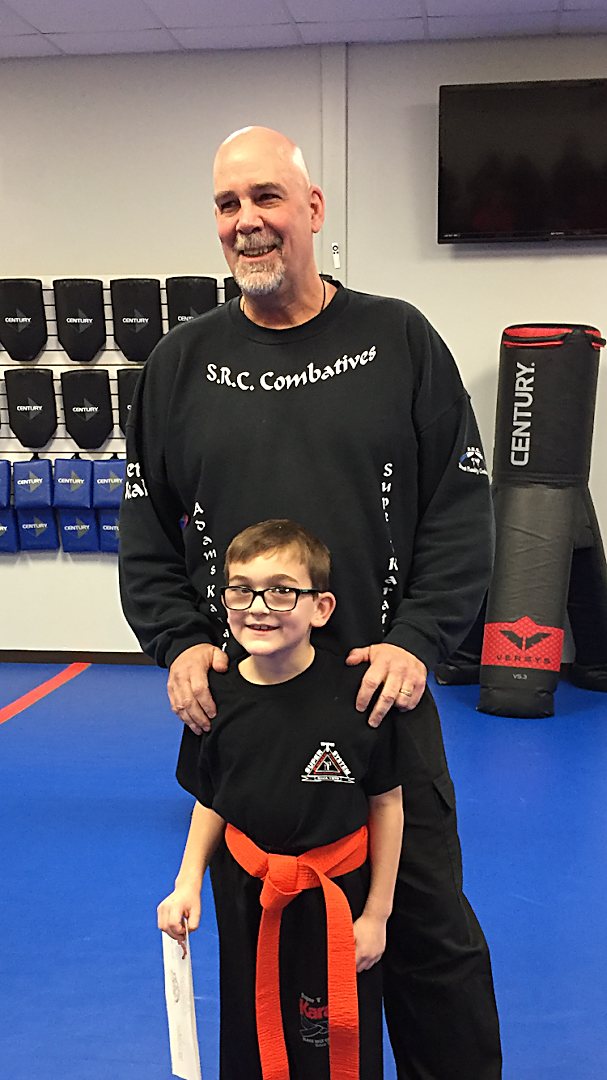
When Grand Rapids parents look into kids martial arts for focus, they are often hoping for everyday skills, not a dramatic overnight change. They may want a child to listen through an instruction, shift away from a screen without a long argument, or feel more comfortable joining a group. Martial arts class can offer a structured place to practice attention, effort and confidence, while home and school remain important parts of a child’s life.
At Super T Karate, our Kids Martial Arts program is for ages 6 to 12. We teach movement and martial arts skills, but we also ask students to pay attention, follow directions, take turns and keep trying. Those are practice opportunities, not guarantees about how a child will behave in every setting. Parents can look for small, observable signs and build on them patiently.
Kids martial arts for focus starts with small moments
Focus is not simply sitting still. For children, it can mean noticing a direction, understanding one step, returning attention after a distraction and completing a short task. In a class, instructors can make those moments concrete by demonstrating a movement, inviting students to try it and offering a correction. Repeating that cycle helps children see what paying attention looks like in action.
A parent might first notice that a child remembers where to stand, waits for a turn or follows a two-part direction more readily. These small observations are more useful than expecting a completely different personality. Children develop at different paces, and one class or one week cannot tell the whole story.
- Notice specific actions, such as listening to a whole instruction before moving.
- Praise effort and returning to a task, not only getting a movement right.
- Keep expectations age-appropriate and give your child time to settle into a group.
Screen time and smoother transitions
Screen-time transitions can be hard in many households. A martial arts class does not replace family rules about devices, but a regular activity can give the week another predictable routine. Children know when they are expected to change clothes, arrive, listen and participate. That sequence can be a useful point of practice for shifting from one activity to another.
Try making the transition clear at home too. Give a reminder before it is time to stop, state the next step in simple language and keep the routine consistent when possible. Rather than framing class as a punishment for screen use, describe it as a chance to move, learn and spend time in a structured setting.
- Agree on a device stopping point before the activity begins.
- Use a brief warning and one clear next action, such as putting shoes on.
- Recognize cooperation when your child makes the transition, even if it takes effort.
- Keep the conversation calm; avoid comparing your child with siblings or classmates.
The goal is not to claim that martial arts fixes screen habits. It is to give children opportunities to practice routines and give parents another setting in which to notice what helps. If transitions are difficult, simple consistency at home can matter more than adding pressure.
Homework, routines and the value of practice
Homework asks children to organize materials, begin a task and keep going. Martial arts class has its own routine: arrive, listen, practice a skill and respond to feedback. These settings are not the same, and learning a movement does not automatically make homework easy. Still, a child can experience the satisfaction of working through a challenge with guidance and repetition.
One helpful family conversation is to ask what your child did when a movement felt tricky. Did they watch again, ask for help or try a smaller step? You can connect that idea to homework without turning every practice into a lecture. “What is one small step you can try?” is often more encouraging than “Why can’t you focus?”
Make progress visible without making it a contest
Children benefit from feedback that is specific and kind. Instead of saying only “good job,” point out the effort you saw: “You listened for the whole direction,” or “You tried again after it felt awkward.” Avoid making progress a competition with another child. The aim is helping your child notice their own learning and understand that mistakes are a normal part of practice.
- Ask your child to name one thing they learned after class.
- Keep praise connected to effort, patience or thoughtful listening.
- Use a simple weekly routine for gear and arrival so the child can take part in preparation.
Listening skills in a group setting
In class, children practice responding to instructions while sharing space with other students. They learn to pause, watch a demonstration and wait for a turn. Instructors can guide these skills through clear expectations and repeated practice. For parents, an early sign may be a child telling you what happened in class or remembering a familiar routine without as many reminders.
Listening is not the same as unquestioning obedience. Children should be able to ask for clarification, communicate discomfort and understand safety directions. A welcoming instructor makes room for questions while keeping the class organized. When you visit, notice how staff speak to children and how they redirect a student who is distracted.
A mom told us her child used to stay close to her at first and gradually became more comfortable following the group routine. Every child’s experience is different, but that kind of gradual settling-in is worth valuing. A child does not have to be the loudest or most outgoing student to participate meaningfully.
Shyness, confidence and trying something new
Confidence is not a fixed trait, and a shy child does not need to become outgoing to benefit from a new activity. Confidence may look like stepping onto the practice area, asking a question, trying a movement or returning after a difficult moment. Adults can support those steps by letting children warm up and acknowledging courage without forcing them into the spotlight.
Before a first visit, explain what your child can expect in simple terms. Tell them they will meet instructors, watch and try activities, and that it is okay to ask questions. Afterward, ask what felt comfortable and what they might like to learn next. Listening to the child’s perspective helps you decide together whether the program feels like a good fit.
Choosing a martial arts school in Grand Rapids
The quality of the teaching environment matters. Look for instructors who give clear directions, supervise students closely and treat children with respect. Ask how a newcomer joins the class, what ages are included and how the school handles a student who needs a little extra time to follow a drill. A trial visit can help you see the atmosphere for yourself.
- Observe whether children know where to stand and how to take turns.
- Notice if instructors explain movements and offer patient corrections.
- Ask what a typical class looks like for your child’s age group.
- Choose a location and schedule that your family can manage consistently.
- Talk with your child after the visit, and take their comfort seriously.
Super T Karate has served the Northeast Grand Rapids community since 1992. Our family-run school is led by Master Terry “Super T” Gay, with Sensei Leah and Sensei Ryan teaching alongside him. We are located at 4981 Plainfield Ave NE, convenient for families in Plainfield Township, Comstock Park, Rockford, Belmont, Kentwood, Walker and Cedar Springs.
Children ages 6 to 12 can explore our Kids Martial Arts program. Families with younger children can learn about Super T Tigers for ages 4 to 5, and you can see all classes to compare options. We focus on teaching students with patience and clear expectations, so parents are welcome to ask questions about a first class.
A note for parents of children with attention challenges
Many parents of kids with attention challenges tell us they are looking for an activity with clear routines, movement and encouraging instruction. Every child is different, and a martial arts class is not a medical treatment or a substitute for guidance from a qualified professional. You can describe what helps your child participate and ask how instructors structure directions, transitions and practice.
Consider starting with a visit and a short conversation with your child. You might ask what made them feel comfortable, whether they understood the instructions and what they would like to try again. Those answers can help you decide whether the setting is a good fit without putting pressure on the child to show immediate change.
Partner with the instructor
Useful communication can be brief and practical. Let the instructor know what directions your child tends to follow best, whether they need a moment to observe first, and how they signal that they need help. Then give the class time to become familiar. A supportive team approach makes it easier to notice which routines help your child engage.
Frequently Asked Questions
Can martial arts help my child focus?
Class provides structured opportunities to listen, practice and return attention to a task. Children respond differently, so look for small changes rather than assuming a particular result.
Will martial arts improve my child’s homework habits?
There is no automatic transfer from class to homework. A child may practice persistence and following steps in class, while homework routines still need support at home.
Is martial arts a good activity for a shy child?
It can be, if the school offers respectful instruction and room to settle in. Confidence can mean trying one small new thing, not becoming outgoing.
How can class help with screen-time transitions?
A scheduled activity adds a predictable routine, but it does not replace family device expectations. Clear reminders and calm transitions at home remain useful.
What ages are included in Kids Martial Arts at Super T Karate?
Our Kids Martial Arts program is for ages 6 to 12. Contact us to ask about your child’s readiness and what to expect on a first visit.
What parents can notice first
Start with the small signs: your child remembers a direction, takes a turn, tries again or talks about something they learned. Give those moments time to develop, and keep your expectations grounded in who your child is. Martial arts is one setting for practice, encouragement and movement, not a promise that every challenge will disappear.
If you are exploring kids martial arts for focus in Grand Rapids, come see how we teach. Try one week of classes and receive a free Super T T-shirt for $19.99 through our Kids Martial Arts program. We are happy to answer questions and help your family decide whether the class feels right.
New Student Experience
Ready to See It In Person?
1 Week of Classes — $59 $19.99
Keep Reading
Parent Guide
Karate for Bullying: How Grand Rapids Kids Learn to Stand Up Without Fighting

Self-Defense
Self-Defense Classes Grand Rapids: Karate, Kickboxing or Krav Maga?
Parent Guide
Martial Arts Training Partners: Why Training Together Works (And When It Doesn't)
Parent Guide