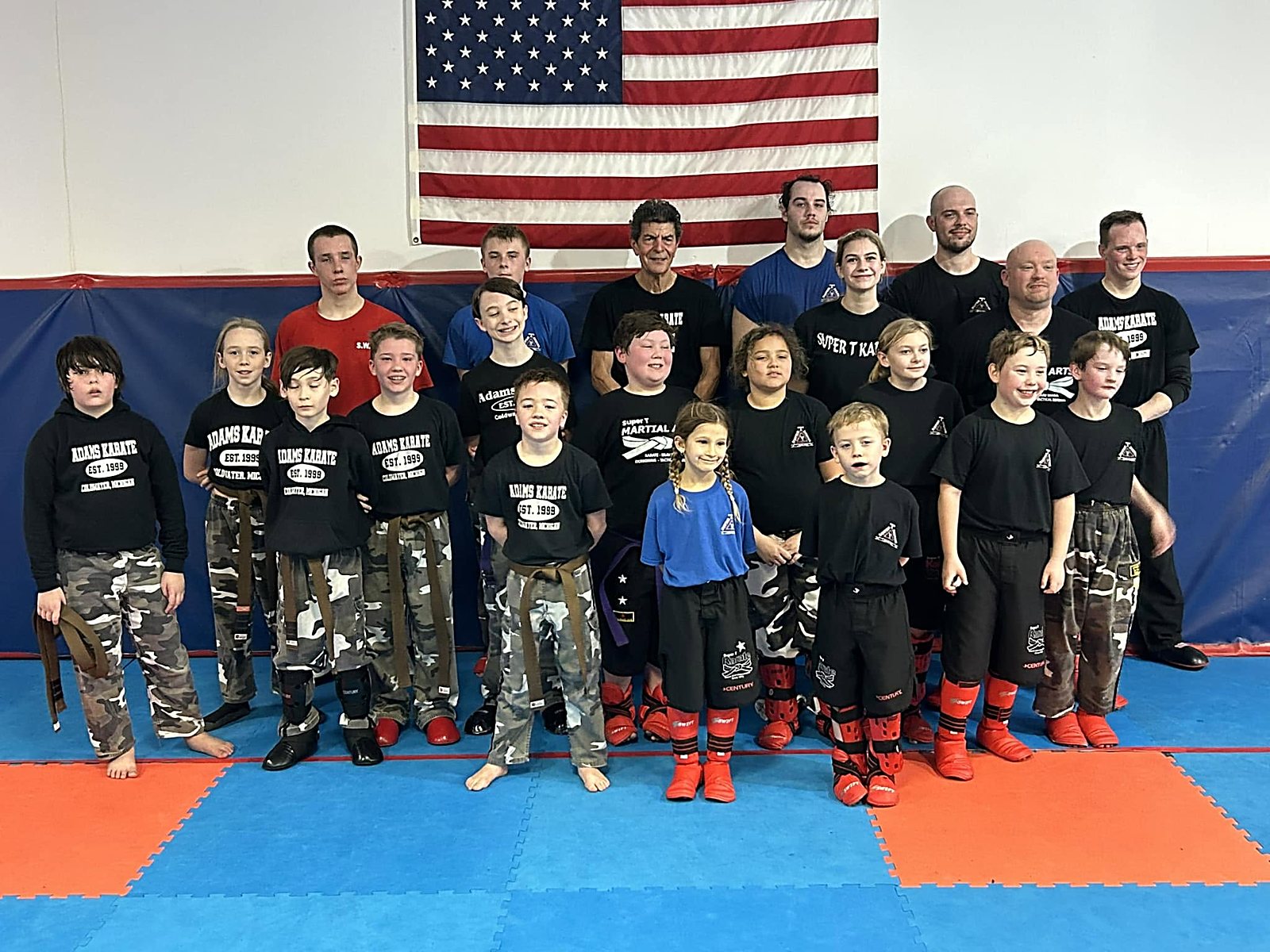
Walking into your first karate class is a little like walking into a new school. You do not know where to stand, you are not sure what to wear, and you are a bit worried everyone else already knows what they are doing. That feeling is normal. Almost every student who has ever stepped on our mats in Grand Rapids felt it on day one.
The good news is that a first karate class at Super T Karate is built for exactly that person. We have been welcoming brand new students on Plainfield Ave NE since 1992, and we have learned what helps people relax, learn, and want to come back.
This guide walks you through what actually happens, step by step. Whether you are a parent bringing a four-year-old, a 10-year-old who is a little shy, or an adult who has not exercised in a while, you will know what to expect before you walk in the door.
Before Your First Karate Class: The Simple Prep
You do not need to buy anything or practice ahead of time. The most useful preparation is just showing up a little early and dressed to move.
What to wear
- Comfortable athletic clothes: a T-shirt and shorts, sweatpants, or leggings.
- No zippers, buttons, or belts that could scratch a partner.
- We train barefoot on the mats, so shoes and socks come off at the edge.
- Long hair tied back, and jewelry left at home or in the car.
- A water bottle with your name on it.
You do not need a uniform for your first week. Your intro includes a free Super T T-shirt, and plenty of students train in it.
Eating and drinking
A light snack an hour or so before class is ideal. A heavy meal right before class makes jumping jacks unpleasant for anyone, especially kids. Drink water during the day so you are not trying to catch up during warm-ups.
When to arrive
Plan to arrive 10 to 15 minutes early. That gives you time to park, check in at the front counter, meet your instructor, and let your child look around before class starts. Rushing in at the last minute is the fastest way to make a nervous kid more nervous.
Walking In: Meeting the Super T Team
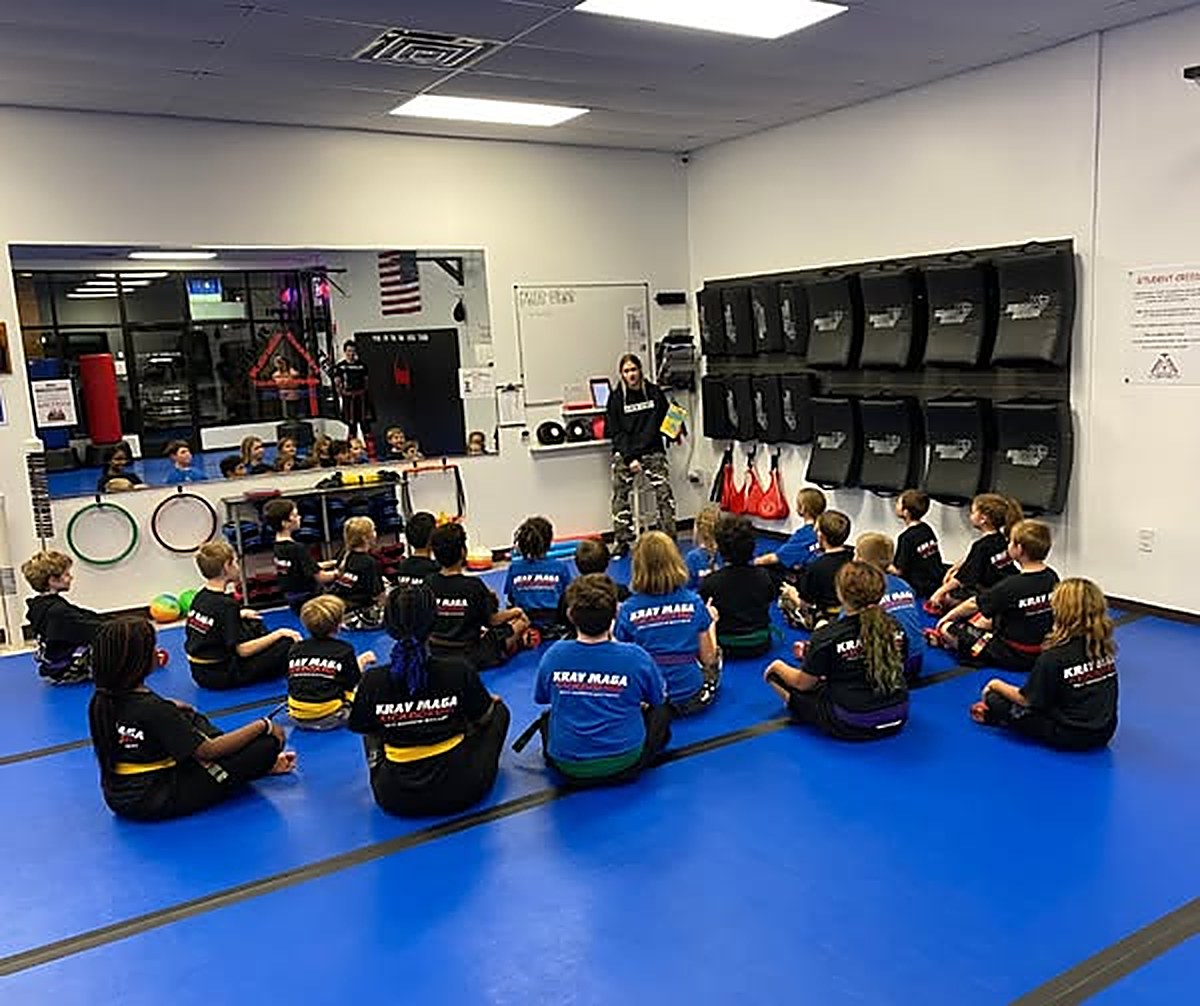
When you come through the door, you will see the front counter, the viewing benches for parents, and the blue training floor. Someone from our team will greet you, usually a member of Terry's own family. Sensei Leah and Sensei Ryan teach alongside Master Terry "Super T" Gay, so the person who welcomes you is often the person who teaches you.
We will ask a few quick questions so we can help you get the most out of class:
- Any injuries, health concerns, or limits we should know about.
- Previous experience, even if it was years ago.
- What you or your child hope to get out of training.
- For kids, anything that helps us connect: shy, energetic, loves soccer, hates loud noises.
That conversation takes a couple of minutes, and it shapes how we coach you. A child who is nervous might start beside an instructor. An adult with a sore knee will get modified versions of drills.
How a First Karate Class Is Structured
Every class follows a rhythm. Knowing it ahead of time takes away most of the mystery.
1. The bow in
Class starts with students lining up and bowing. It is not religious. It is a sign of respect for the instructors, your training partners, and the time you are about to spend getting better. New students simply copy what everyone else does.
2. Warm-up
Next comes a warm-up of about 10 minutes. Expect jogging, jumping jacks, stretching, and some light movement games for kids. The goal is to get your heart rate up and your joints ready, not to exhaust you. Go at your own pace; nobody is judging.
3. Skill building
This is the heart of class. You will learn basics like a fighting stance, how to make a proper fist, front punches, and simple kicks. Instructors break each move into small steps, show it, and then walk around giving one-on-one corrections.
4. Drills and pad work
Once the basic move makes sense, you practice it. That often means hitting focus mitts or kicking shields held by an instructor or partner. For many first-timers, this is the moment they start smiling. Hitting a pad with good technique feels great.
5. Character lesson and bow out
Classes end with a short talk about a life skill, like focus, respect, or self-control, and then a bow out. In our kids classes, this is also when effort gets recognized in front of the group.
What a First Class Looks Like for Kids
Our kids programs are split by age so the coaching matches how children actually learn.
Super T Tigers (ages 4 to 5)
In the Super T Tigers preschool program, class is short, upbeat, and full of games that sneak in skills. A four-year-old's first class focuses on listening, standing on a spot, following simple directions, and having fun. Expect lots of high-fives and very little standing still.
Kids Martial Arts (ages 6 to 12)
In kids martial arts classes, children learn real technique while building focus and confidence. First-day students are paired with helpful classmates or coached directly by an instructor. By the end, most kids can show you a stance, a punch, and a kick at home.
When a child is nervous
Some kids run straight onto the mat. Others hold on to a parent's leg. Both are completely normal. Our instructors know how to invite a shy child in gently, sometimes by giving them a job like holding a pad. A mom once told us her daughter watched the first ten minutes from the bench, then joined in and did not want to leave at the end. That is a very common first day.
- Talk about class in a positive, low-key way beforehand.
- Avoid promising they will "get to fight" or "break boards" on day one.
- Let the instructor take the lead once your child is on the mat.
- Praise effort after class, not performance.
What a First Class Looks Like for Teens and Adults
Adults usually carry different worries into their first karate class. Am I too out of shape? Will I get hit? Will everyone be younger than me? Our Teen & Adult program is for ages 13 and up, and it includes people of every fitness level.
- You will not spar on your first day. Contact is introduced gradually and with control.
- You set your own intensity. Taking a water break is always fine.
- Drills blend karate, kickboxing, and practical self-defense.
- The atmosphere is friendly: no egos, just people who want to get better.
Expect to sweat, learn a few combinations on the pads, and practice a simple self-defense skill. Master Terry's motto, "Common sense before self-defense," shapes the adult class too. Awareness and avoiding trouble come before any technique.
After Your First Karate Class
When class ends, take a minute to catch your breath and ask questions. Instructors are happy to talk about how it went, what to work on, and which class times fit your week.
How you might feel
Most people leave tired and happy. Adults often notice sore shoulders or legs the next day, which is normal and fades after the first week or two. Kids usually want to demonstrate their new punch to everyone at dinner.
Questions worth asking
- Which class times are best for my age group?
- How often should I or my child train each week?
- How does belt progression work?
- What does membership look like after the intro week?
We answer those straight, with no pressure. You can also read our honest answers page before you visit.
Why the First Week Matters More Than the First Class
One class is a good start, but one week tells you much more. By the second or third class, the room feels familiar, the warm-up feels easier, and you start to recognize faces. That is when people know whether a school is the right fit.
That is why our intro is a full week instead of a single visit. You get to try different classes, meet more of the team, and see how training fits into real life, homework nights and work schedules included.
- Day one: learn the routine and the basics.
- Day two or three: things start to click and nerves fade.
- End of the week: you know the instructors, the class times, and how you feel about training.
Frequently Asked Questions
What should I wear to my first karate class?
Comfortable athletic clothes without zippers or buttons. You will train barefoot, and no uniform is needed during your intro week.
Do I need to be in shape to start karate?
No. Karate is how many of our adult students get in shape. Instructors modify drills so you can work at your own level.
Will my child have to spar in the first class?
No. First classes focus on basics, listening, and confidence. Any contact work is introduced slowly and always supervised.
Can parents watch the first karate class?
Yes. We have viewing benches right beside the mats, and most parents of new students watch the whole class.
How long is a first karate class?
Tigers classes are shorter to match a preschooler's attention span. Kids and adult classes run longer. We will confirm exact times when you book.
What if my child refuses to join in?
It happens, and it is fine. Let them watch. Most kids join within a few minutes once they see how much fun everyone is having.
Book Your First Karate Class at Super T Karate
Your first karate class should feel welcoming, not intimidating. At Super T Karate on Plainfield Ave NE, you will be coached by a family-run team led by a 1986 world champion, in a school Grand Rapids families have trusted since 1992.
Start with our one-week intro: a full week of classes plus a free Super T T-shirt for $19.99. Pick the program that fits, Super T Tigers, Kids Martial Arts, or Teen & Adult, and we will see you on the mats.
New Student Experience
Ready to See It In Person?
1 Week of Classes — $59 $19.99
Keep Reading
Parent Guide
Karate for Bullying: How Grand Rapids Kids Learn to Stand Up Without Fighting
Child Development
Kids Martial Arts for Focus and Confidence: What Grand Rapids Parents Notice First
Self-Defense
Self-Defense Classes Grand Rapids: Karate, Kickboxing or Krav Maga?
Parent Guide